Sunday, August 21, 2011

MC Food With A Purpose

Friends have been finding this blog, and that's great!  My hope is everyone feels encouraged to not only explore their own culinary creativity, but that this becomes a vehicle for sharing....growing....and learning from one another.

To that end, I must include what some might feel is a controversial category....medical cannabis cooking.
I am and have been a medical cannabis patient for a number of years.....self declared originally in 1980, then finally made legal with the passage of California's Prop 215 in 1996.

You'll notice there's now an "Adult Content" announcement when the blog first comes up.  This is simply to assure folks I'm not out to destroy the youth of America by teaching them how to make Pot Brownies.  Call it a disclaimer if you will.  Call it a bit of ass coverage too....both are right.

I don't wish to corrupt any body's morals, there are people much more suited for that sort of work. If anyone wishes to take offense at the presence of Medical Cannabis cooking on this blog, so be it.
No apologies will be offered, because Medical Cannabis is something I truly believe in.  If this is disturbing, perhaps there are other blogs out there more suited to your sensitivities.

All that being said, the Medical Cannabis recipes will be noted appropriately, with MC at the beginning of the blog entry title and appropriate notations in the tags and labels.

Where to begin? Where to begin?
Why, at the beginning, of course!

MEDICAL CANNABIS COOKING
Preparations
   Freeze your leaf!
   Believe it or not, it actually helps in a couple of ways.  The most obvious is that freezing keeps things fresh.
The not-so-obvious thing is that I think it actually helps boost the potency....or at least keeps any from being lost through improper leaf storage.
   Most folk start with Cannabis Butter and just stay there....figuring that's the only way to extract the active ingredients and incorporate them into food.   It's tried and true, dependable, and easy. 

1) CANNA-BUTTER
Butter-1 to 2 pounds in a  heavy, deep pan with a good fitting lid.
Medical Cannabis - 1 ounce (leaf is okay for this....also lots less expensive than buds)
Put a low flame under the pan with butter in it, add the Medical Cannabis a bit at a time, stirring it as the butter melts.
Once everything is in the pan, keep stirring slowly for a while until the butter is completely melted.  Lower the flame and cover.  Let simmer on the stove, stirring occasionally, for 8 hours.
Be careful not to burn the butter!  Flame must be put to lowest possible setting to avoid this, and keep an eye on everything...remember to use all your senses including the sniffer!  Sometimes that can tell when something's gone awry before anything else kicks in!
As long as the butter has that familiar nutty, cannabis smell all is right with the world.  Anything past that, remove the whole thing from the heat and let it cool.
Anyway, once the butter is done, strain through several layers of cheese cloth, squeezing until it drips no more. Let the butter cool in a heavy glass jar...keep it in the fridge 'til ready to use.

This butter can be used in any recipes that call for butter or margarine.   Things to be careful about-the resultant flavor will be decidedly Medicated.  Some people like to add a bit of ginger and coriander when making cakes using the butter.

2) CANNA-FLOUR
 This preparation is a great additive with dry ingredients.....adding it with regular flour for example.
What is needed here is a coffee and/or spice grinder and leaf.  I'd recommend cleaning your leaf ahead of time to remove sticks, twigs and other such things.  Don't just throw the cast offs away!  They'll come in handy for making tea!  Put  the clean leaf in the grinder a bit at a time and let it rip!
You notice it has a flour-like consistency....but don't be fooled!

Pour the CannaFlour through a sifter or sieve and you'll see there are still some impurities, things nobody needs to be eating, so put them in a pan of boiling water for tea.  No use wasting a thing!

At this point, some people just add the CannaFlour to the dry ingredients.  Personally I think there's another step....the Activation.
For that you need a dry metal pan.  Do not, repeat Do NOT use one of those non-stick coated pans!  A metal spoon is necessary, too.  NOT wood or plastic or anything else.  An old tablespoon from the drawer will work fine.
Put the pan on a medium flame.
Take the cleaned CannaFlour and pour it into the heated pan.  Start stirring it around, moving the entire contents, watching for little whisps of smoke and color changes.  You'll notice both.  Remove the pan from the heat periodically, stirring constantly.  Place it back on the heat and keep stirring. When it's done (the color change will have become uniform) stop the heating.
IMMEDIATELY REMOVE CANNAFLOUR FROM THE PAN TO A COOL BOWL.  Toss it a few times.
NOW it is ready for inclusion in recipes as part of your dry ingredients.
NOTE:  CannaFlour prepared this way is very potent.   Get a feel for proper dosage by making something like pancakes with a blend of regular flour and CannaFlour.   A 3 to 1 ratio or thereabouts works (3 parts regular flour to 1 part CannaFlour) seems to work, but experiment!  Each person is different.

3) CANNA-TEA
Quick and simple, Cannabis Tea soothes the soul and warms the heart....alone it tastes a little nutty, sometimes a little botanical.   Depends on the strain used among other things.
Canna-Tea can be made from leaf steeped in boiling water or by infusing some CannaFlour in boiling water.
Either way it's great.  Some people like it with a bit of honey.

CannaTea can be made into a nifty substitute for milk in recipes-real simple!  If you can find some powdered milk, whole milk is best, just add the tea and powder together and whammo!
You've got yourself medicated cow juice! Perfect for bowls of cereal or that favorite recipe.

Now, these preparations are fine as stand-alone methods, but they can also be combined to produce very potent medicinal food.

I'll be using all three in my next Medical Cannabis recipe, coming soon.

More "regular" recipes coming too!

Feel free to share your recipes, thoughts and ideas!  And above all else, ENJOY!

PLEASE NOTE: If you wish to share, you can do so anonymously or using your name to receive full credit.
 

Saturday, August 20, 2011

KITCHEN THOUGHTS and Grilled Cheese

Is there a more wonderful place on earth than a warm, inviting kitchen?
Pots and pans hanging within reach, clean work surfaces and tools at the ready....a well appointed. properly outfitted kitchen is any cook's hope, desire and goal.
Randi's kitchen
Most of us aren't in possession of stainless steel walls, professional strength burners or that oh-so-useful salamander!  Drat the luck!

But in truth, the room doesn't have to be huge or full of the latest appliances.  Most of us have to work with what's available.  There are very few of us with the (be still my heart!) instant hot water spigot over the stove.  But we all have a place to prepare our meals....from a window sill and a hot plate to the Waldorf's main kitchen we all have that one location from which good things can come.

And that place should be seen as special, treated with respect and kept clean...ready for meal prep or snacking at a moment's notice. After all what comes out of there goes into not only our bodies, but the bodies of those we know and love.
What makes a great kitchen?  Part of it is the room itself, some of it is the tools available...no lie there. But the most essential ingredient-the one that makes or breaks everything else?  The cook.

It boils down to the cook and their commitment to produce the best possible food experience. The cook's passion.  Without it, the resulting meal can seem lifeless....even if technically perfect. 

So when you're setting up that special part of your world, treat it as special....sacred...ready for the task at hand and unavailable for bullshit.   Arguments don't do well in kitchens-too many sharp objects!  Clutter doesn't work well in a kitchen-garbage and good food don't mix!

What does work is a clean surface, some ready tools and the best ingredients you can get.  A bit of thankfulness to the Cosmos during preparation couldn't hurt, either!
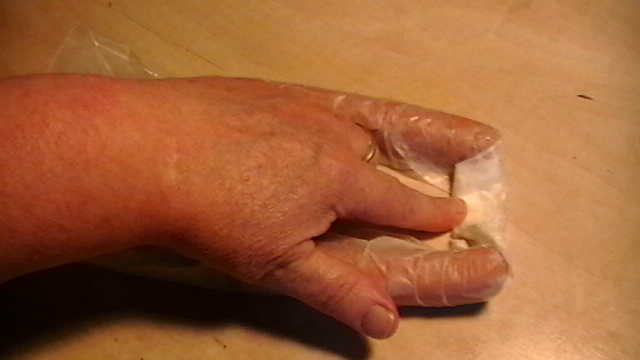
As for a recipe today....how about something simple?!
Let's celebrate Saturday with some good old fashioned Grilled Cheese!

What makes this version stand out?
It's crunchy....inside and out!
This is accomplished by pre-toasting the inside  portion of the bread before adding cheese.

A hot skillet and release spray works, but so does a toaster, especially the kind with the bagel setting. Put both slices of bread into one toaster hole and press the bagel button and let it go on a mid-low setting.

When it comes out, the exposed parts of the bread will be toasted and the other will still be waiting for the pan!  Also, with the toaster method, you don't add any extra butter or grease.  Nifty way to cut a few fat corners, eh?   As for bread choice, that's a personal matter.  Sometimes I absolutely JONES a toasted sourdough....other times my tasters will have nothing if it can't have a multi-grain or even toasted oat.  Toasting is to bread what grated cheese is to spaghetti....another opportunity for the Yum Factor.

Types of cheese?  Again it's a personal decision.  Have fun!  Mix it up!  Try some Pepper Jack! Throw a couple tomato slices into the mix!  Maybe even experiment with left over pieces of French Toast-minus the syrup and confectioner's sugar-for an added dimension of taste.  Try cooking it with a little bacon grease or olive oil, garlic and herbs-just make sure your skillet is very hot, but not smoking before adding the food...that to insure crispiness.  Otherwise it'll get grease soaked and nasty.

I've had it made with thin-sliced, toasted eggplant....between softened tortillas....
I've even heard of someone trying it with waffles....although I've personally not had that experience to date.
REMEMBER-Slice your cheese thin...repeat THIN!  Better to layer thin sheets of cheese than wait for a big chunk to melt! Your bread will be hopelessly burnt by the time it does! 

No matter how you slice it, Grilled Cheese is simple, satisfying and adaptable for most people.
If you have any suggestions, ideas or anything feel free to share!

Thursday, August 18, 2011

Japanese Eggplant in the Menu Plan

For anyone who may be concerned about my lack of vegetable mentions, please be assured I do include them in the daily fare.  We are fortunate to live near some of the greatest and most bargain-filled outdoor markets in San Francisco, so don't always have to pay supermarket prices for veggies and fruit. There's literally no excuse not to have something on hand when it's all laying out there, ready to be gotten.

Even when money is tight.....which as we all know, it. is.

But I have lived in places where the only thing we had to depend on was the local grocery...that's when juggling the food dollar really gets complicated.  My main idea there is to make a list of essentials and get them first, then it's all pricing and menu planning.

Speaking of menu planning, it's always good to change things up if you can.  Of course, there are those who like a schedule....Meatloaf Monday, Ratatouille Thursday....hey! What ever beats your egg!  But if you can, give the old palate a new sensation once in a while!  Surprise the family! Astound your friends and still come in within the budget.

Eggplant can be a wonderful way to do that.  Japanese eggplant is long like a zucchini but smooth and shaded a pale, beautiful purple....gradient shading on a lot of  them from pale, almost while, through lilac into purple at the tip.  This version has a subtle sweetness to it, very tender.  Cut it in thick, diagonal  rounds and add to a wok that's already had garlic, onion,coarse chopped celery, green peppers and what ever else strikes your fancy.

For me that would include some spicy small red chillies, bits of stir-fried tofu (firm packed survives best, but still make sure to drain it well before cooking!) and even a tablespoon or two of cooked black beans.   Of course I'd top it off with a last minute addition of mushrooms-these I like almost raw- and a lightly thickened sauce made with soy sauce, a bit of dried sherry and some orange or lemon juice - combination to measure about 1/2 cup to about 1 or 11/2 tablespoon (at most) of cornstarch. Put all this into a small sauce pan and whisk or stir.  It'll start to bubble.  Turn the heat down and continue to stir. When it's slightly thickened, pour over the wokking food and toss.

Feel free to add a few other spices if you wish, but taste-always taste before you do, then add them gradually.
The sauce should help thicken any residual liquids in the wok.
Top the whole thing with chopped green onion and some toasted sesame seeds if you like and serve over rice.

Rules on Rice:
It's a 2 to 1 ratio there.  2 parts water to 1 part rice every time.    Heat the pan with some butter, stir in uncooked rice and stir around 'til the butter is melted a the rice is coated then add the water and cover.  Bring to a boil, lower flame to simmer and allow it to simmer for 20 minutes then turn it off, remove from the heat and don't open it for five minutes.  When you do, fluff it with a fork and it's done.

That's only one recipe for one type of Eggplant....and there are so many more to explore!
Feel free to write and let me know what you think, share your recipes and your passion for cooking and living....because that's what it's really all about!


Tuesday, August 16, 2011

Fundamentals of Chicken Stew

When trying to decide what to do about needing a week's worth of food with a slim budget, I look for elasticity....that is, things that stretch.


A roast is great for first night meal and produces some great left overs, not the least of which is stew.  Of course, these days such a purchase may require taking out a loan. So what to do, what to do?

The mark-down section of our grocery store is my usual haunt. It's there I've been able to find items to sustain us...providing the booty is used up right away.

The other day I found some marked-down odd chunks of chicken.  It had been a while, so I made some stew with it.  Yummy!

The way it's usually done is just to lightly brown off the meat then dump everything else into the pot and let it simmer.  That's perfectly fine, only don't let the chicken get dried out.

I like to layer the flavors.....even going so far a seasoning the stew pot.  Put a low flame under the pan and clean an onion.  after adding a small bit of olive oil or butter, add the onion's "caps" (top and bottom) flat side down to the pan and let them brown.   Then turn your attention to the rest of the veggie prep.

Cut onion, celery and garlic into bite-sized pieces.While you're at it, slice the other veggies so that they're ready for adding to the foray. Add the veggie ends and cast offs to the pot and let them brown too. Don't forget to stir everything once in a while....browning is okay, scorching isn't!

When all the odds and ends are brown enough, remove them from the pan.  They can be tossed at this point...all their flavor and nutrition has been rendered.
Do not....repeat...DO NOT rinse the pan!  All that brown stuff and those little bits of flotsam are EXTREMELY IMPORTANT!  They are the difference between bland and bravo....the backbone of your dish....the Flavor.

Brown off the chicken (use other meat if you prefer....or just use veggies) in that same pan -do not over cook it...the REAL cooking will come a bit later.  For now you just want to sear in the juices.  Then remove it and add stock or water.  Stock is better.

Stir the liquid 'round...scraping the sides and bottom of your pan to incorporate the little specks and smooshes.  See how the liquid picks up the color?  It's also picking up flavor....that's something you wouldn't get with just adding water to meat and setting it to simmer!

Next add the veggies that will take the most time to cook....potatoes, carrots...that sort of thing.  Some people steam these items part way before adding to the stew pot, and that's fine-only remember to use the liquid from the steaming as part of the stock/liquid added for cooking the stew!

Once these ingredients have cooked most of the way, add the ones that don't take too long....corn, peas.....the last things to add would be items like zucchini and mushrooms, then finally the meat. Let all that simmer for about 20 minutes or so, until everything is done.  You may have to thicken the gravy...if so, it's approximately two tablespoons of cornstarch to about equal measure of cold water, stirred 'til cornstarch is incorporated, then add to the stew.  Let it all simmer some more...you'll notice it thickening.   When it's done, remove stew from the heat and let it rest after a final stir.

Some folks use flour and water as a thickener and others don't bother thickening it at all....personal preference wins out here.

Serve with biscuits, bread and butter or rice.  Egg noodles make an interesting alternative, especially when tossed with a bit of garlic, herbs and butter before service.

Learning to make stew taught me a great deal about cooking....how to layer flavors.....how to create a gravy out of vegetable odds and ends and how not to over-cook the chicken. But mostly, it taught me that there are always possibilities....even when odds and ends are all ya got.


Wednesday, August 10, 2011

Breakfast Begins With.....

Money's tight. No argument there.  Much as we'd like to be eating everything healthy, low fat and non-meat, the budget doesn't allow for a great deal of "extravagances."  I've found myself more and more in the marked-down sections of the store, watching like a hawk for my chance at the pickin's.   Most times I come home with a treasure or two...mind you, they need to be used that night.

Sometimes though, I don't come away with much and we make due with what we can get.  Sound familiar?

I'd love to be vegetarian, but have you seen the prices?  Broccoli, carrots, onions....the standards are going through the roof; God forbid ya try for anything fancy like a mushroom.  Tofu's even gone up, and with Jack's current medication regimen we have to use soy products sparingly. But we manage.

Today for breakfast I wanted something homey, comfy, tasty and filling.  I didn't want to have a lot of hot cereal or pancakes, but wanted us to have something substantial enough to keep us from extra snaking during the day.

With a quick scan of pantry and fridge, I produced the following:
            4 eggs,  mild Italian sausage (bulked not in skin),  1 small red apple,   dried grits,   margarine,   milk,
           whole wheat flour,   garlic,    2 slices of bread,    apple juice,     water
I immediately thought of a country breakfast!  Yum!
       Over Easy Egg, Sausage and Apples,  Grits and Gravy (made with pan drippings, apple juice, a little whole wheat flour, garlic and milk) and even a bit of Toast.  Sounded great!

Some may be shouting "but that was ITALIAN sausage!"  To which I reply "Italians eat breakfast too, besides when cooked with a bit of butter or margarine, some apple juice and apple slices, the flavor tones down a bit.

NOTE: Do not repeat DO NOT add cloves and cinnamon to the sausage and apples!  This is not that kind of dish! You want the sausage's personality to still be known, with the apple flavor as a compliment rather than an actual main feature.  Let it hint about itself with each bite.

Eggs, Sausage, Grits and Gravy Breakfast
I use a cast iron skillet that's been well seasoned through the years....heat it over medium flame. To this I add a tablespoon of water, letting it hiss for a moment.  Add the sausage pieces, cover for two minutes.  Turn and cover again.  After two more minutes, remove cover and turn the pieces again. They should start to brown.  At this point you can add 1/4 cup apple juice and stir it around. Sausage and juice will start cooking.....let meat brown for about 3 minutes (go by your senses though, sometimes it takes less sometimes more), turn again.

Add apple slices at this point...they should be small, bite sized pieces.  Add a dash more juice if pan is dry, cook uncovered, turning often until everything is browned on all sides and sausage is done.
Apples should be softer, but not mushy. NOTE: If you peel the apples, they'll cook quicker. I usually don't peel mine.

Remove sausage and apples from pan.....let drain. (a mesh strainer is good for this) to remove any grease, also a good idea to pat it off with a paper towel.

While that rests, we can prepare the other components.

PAN GRAVY for SAUSAGE  and GRITS
Mix 1 to 2 tablespoons of flour with 1 cup of cold milk. Use a wire whisk to make sure it's mixed well.  Add 1 to 2 tablespoons of margarine to the pan and bring to heat.  Add the milk mixture and whisk in skillet, bringing it back to slow bubbling. Lower the heat so it doesn't burn.  The mixture will be thickening at this point.

Add more apple juice if needed and adjust flavorings. Remember, you are going for sausage flavor NOT apple pie!  Garlic would be good in this, and I can recommend adding it to the sausage while it's cooking, too. Right along with the apples!

Some people even add a bit of coffee to the gravy....a "Red Eye Gravy" so to speak.  If you do so, adjust your seasonings again after adding it!  Coffee can lend a bitter dimension that can either play well with the other flavors, or not.  Use a judicious hand!

GRITS
Grits (Hominy) are great as a cereal or as a substitute for mashed potatoes.   As part of breakfast, Jack likes 'em in a bowl with a little brown sugar, butter and milk.  I'm kinda partial to the old Grits N Gravy thingie.  A throw-back to my traveling days when I grew to appreciate fine Southern hospitality and cooking.

To satisfy both of us, I make the grits a bit on the firm side by bringing 2 cups of water to a boil, adding about 1/4 to 1/2 cup of grits a bit at a time and a little margarine or butter.  Then when it comes back to a boil I reduce the heat, cover the pan and let it cook for the package recommended time.   Then the IMPORTANT thing is to remove it from the heat, keep it covered for five minutes in a warm place then open and stir it around.  Very similar to rice preparation....and why not?  It's a cereal grain, too!

EGGS
The eggs are standard over-easy.....I cook the first side, flip then turn off the heat and let the pan cook the egg the rest of the way.  After a few moments of that, I remove the pan from the heat, wiggling it slightly to see if the yolks need more firming.  Most folks in this house like a medium-firm egg yolk, so the pan usually heats it well enough, but if not simply turn the heat back on the pan for a few more moments cooking time then they're done!

TOAST
Toasters make toast great.  Each person likes it their own way, so I'm not going to go into it right now...other than to maybe recommend trying pan-toasting the bread once in a while.   There's an extra flavor that comes with pan toasting!

Back to the action.
Assembly is easy.    Toast, buttered.  Egg(s) placed on top.  Sausage and apples on plate,  Grits next to them.  Some folks like gravy on the side, others....like me....want it on the grits and the sausage, too.

Jack's grits are served in a bowl on the side, eggs, toast and sausage on the plate.
Naturally I have some fresh fruit too, when we have it.

So that's one version of breakfast.  Workin' with what we got. 


Monday, August 8, 2011

Adaptability Is The Key...In Food, Life and Surfing

Did you ever have one of those days where nothing seems to be going right, THEN you have to make dinner on top of it all?  Talk about Mercury in Retrograde! I've learned the hard way, the very hard way, to read the signs of a bad day.

Sometimes Duck and Cover can be a very handy tool.

Unless of course cooking's creative process works as a relaxant....which it does for me most of the time. Then I can go all out and produce something wonderful.  But if it starts to go south, I've learned to adapt.

Take a couple of nights ago....it had been a long day; running errands, helping a friend, coming home and trying to do the many things needing to be done.  A lot of the day went okay, at least in the outside world.  Once home, when it was time to tend to my personal things, it all went to crap.

I just missed a very important call, one I'd waited all week to receive and would have to wait 'til the following Monday to get back in touch.   Phone tag, I'm It!  The washing machine decided to have one of it's spells....heck, at that age I'd feel the same way!

The cat box, one of those automatic LitterMaid gizmos, finally died....after seven years of that sort of work, wouldn't you? 

The microwave stopped working mid-cycle, which isn't so bad but I REALLY wanted that cup of reheated coffee!  The oven-a slow one to begin with-decided to not cooperate with my plans for simple baked chicken,  and God only knows what happened to the rice!

"Okay," I said to myself in the middle of the kitchen, "this sucks.  What to do?"  The food had to be saved,
all else would follow. 

The chicken was salvageable, thanks to a nice cast iron skillet and some quick chopping.  Suddenly we were having stir fry. A couple veggies thrown in for color, flavor, texture and nutrition helped round out the dish.

The rice was another matter. It needed some TLC-read Technically Ludicrous Creativity-but I managed to get it un-sticky and un-gloopy by stir frying it too, using some release spray rather than saturating it with butter or grease. Not sure what went wrong with it in the first place, probably too much water or not enough cooking time....or maybe it needed rinsing. Rice can be tricky.

At least the food disaster was averted!  As for the other things, the microwave still needs to be replaced (another seven year old appliance-bought around the same time as the cat box), but I don't depend on it as a primary cooking source so we can wait 'til we save up the money....which may be a while.

The cat box too will need replacing....but we do have one of those "regular" ones for our kitty for the time being. (He is NOT amused).  I guess we're all making adjustments.

Today's entry isn't a recipe, so much as a method....but I wanted to illustrate one of the main points in Cooking and Life - adaptability. It's the true key to survival.  Be it making a meal, planning your next big conquest or just catching a wave on your board....be ready for anything, 'cos it's bound to happen.


Sunday, August 7, 2011

Been A While....good things take time

If Blogs truly reflect a person's life, mine is either too busy to write daily or too scattered to keep up the discipline.  As writing "Fifty Five Is The New..." would indicate, I am capable of the discipline of almost daily writing....so what gives? 

I don't know. What I do know is that cooking is a daily occurrence, at least for me.
Many mornings begin with eggs in our household.
Over easy with a dab of melted cheese over top of the slightly liquid yolk.
Sometimes I do something extra.....like so:

OVER EASY EGGS ON A RAFT OF TOAST

For each egg you need a piece of bread.
Take the bread and with a cookie cutter, glass or lid from non-stick spray can, cut a hole in the center of the bread.  Toast bread slightly on both sides, including the cut-out pieces. They will be the "caps" on top of the eggs.

Eggs cooking inside bread
Spray hot pan with release spray (Pan or so on), add toasted bread slice.  Crack egg into center of toasted bread slice hole.  Egg should begin cooking.  When it seems firm (white looses transparency, yolk still soft)
take spatula and lift toast piece.  Egg should come up with it at this point.  Turn or "flip" so that bottom side is up.  Cook for a few moments more, depending on how firm you want your egg yolk.  Turn off heat. Remove pan from hot burner.  Flip egg again so that original side is back on top.  Place cheese slice on top of yolk. Cover with lid and let sit for 2 minutes, until cheese melts.
Serve alone or with sausage, fruit or other sides.

That's a pretty good starter for the day.

So 'til next time!
Life is a feast- DIG IN!


Thursday, August 4, 2011

KITCHEN TOOLS - Jiffy and other Baking Mixes

Pre-packaged baking mix - no sin within
Using a pre-packaged baking mix isn't a mortal sin.  It's not even a venial sin.  As a matter of fact, I hardly think using Jiffy or Bisquick or any of those other fine products rates knee time in a confessional.

In the spirit of full disclosure, I freely admit to having used them in a pinch. Although most of my preparations are "from scratch," I'll be damned if I'm going to kill myself after a hard day at the studio or whatever.
I keep a box of Jiffy in the pantry and am not afraid to use it!

HELPFUL HINTS: Use the same amount of baking mix in place of the flour, soda and baking powder plus half the amount for shortening or oil called for in recipes.

For example, if your recipe calls for 2 cups flour, 1 tsp. soda, 1/2 tsp. baking powder and 1/2 cup of shortening, substitute 2 and 1/4 cups of baking mix for those ingredients. The soda and baking powder are very small amounts that do not substantially add to the measured amount. Since the shortening or oil is already in the baking mix, it does not take up as much room in your measuring cup, so add enough additional baking mix to equal half the amount of oil or shortening.


The best place to use Jiffy Baking Mix as a substitute for flour is in recipes designed to make biscuits or dumplings, because the mix contains the right ingredients for these items. Don't sift or pack the baking mix in your measuring cup when using this substitute.

Muffins and quick breads have a higher fat ration than is given in the baking mixes, so you may not be pleased with the results of using it as a substitute for flour and other ingredients.  But generally the pros outweigh the cons.

For more information about Jiffry and subsitutions, go to this link:
http://www.livestrong.com/article/448384-can-jiffy-baking-mix-be-substituted-as-flour/#ixzz1Yih5BDOy
Recipe time!

CINNAMON ROLLS IN A PINCH

One of my favorite "in a pinch" things? Cinnamon rolls!  These beauties come in handy morning, noon and night...for company, for family....the sky's the limit. They're easy, quick and tasty....and form the base for so many possibilities!
Making cinnamon rolls

The basic recipe is simpler than simple.

2 cups Jiffy baking mix
2/3 cup milk
3 Tablespoons butter or margarine     
3 Tablespoons sugar/sugar substitute
1/2 to 2 teaspoon cinnamon
1/4  teaspoon cloves

Pre-heat oven to 450 degrees.
Grease a cookie pan, set it aside.
Mix together the sugar and spices, set this aside.
Take the 2 cups of Jiffy baking mix and stir in 2/3cups of milk.   Once the batter is formed, turn it out onto a board or cookie sheet on which you've sprinkled some Jiffy mix.  Knead the dough 20 times by hand.  Then roll the dough to about 1/2 " thick.
Spread the dough with the margarine, then sprinkle the sugar/spices mixture evenly over the dough. Roll the dough like you would for a jelly roll.  Slice rounds 1/2" thick.  Place on cookie sheet, spaced about 2" apart.
Put in the oven and bake for 20-25 minutes or until slightly golden brown.  Eat warm.

Of course, I like to mix things up a bit, so have a few additions.
1/4 teaspoon cardamon - add to the Jiffy mix so the dough has some flavoring
2 Tablespoons grated orange peel - add to the Jiffy mix so the dough has some flavoring.
2 - 3 Tablespoons grated orange peel - mixed in with the sugar/spices
1/2 to 2/3 cups chopped raisins that have been dusted with some of the Jiffy mix.

Spread the dough with the margarine, sprinkle with spices, orange peel, raisins.  Follow the directions above for rolling and baking.   Tasty and oh so Quick! Enjoy!

Monday, August 1, 2011

Components - not just for stereo anymore

Hooking up modern electronics isn't pretty.  Nope.  Right up there with sausage making, high school science class dissections and cleaning behind the dryer.  Nope.  Not pretty at all.  But it has to be done.

In our house I am fortunate....both of us are equally willing to go through the torture of re-routing wires, programming the t.v. and figuring out the remote control. But I know of some households where there is only one Techie for the entire domicile. You can tell which one from a mile away.  They are the ones who look frazzled a lot of the time from  doing battle with the alleged plug-and-play equipment.

You might wonder where I'm going with all this.  Well, that's easy.
We're going to talk about something I call a "component" salad.  That is, a salad with many parts and features.
I know....I can hear it now.  "Okay, so you wanna make a salad.  Don't all of them have 'many parts'?"
Component salad components

Well....yes....and no.

To me, a "component salad" contains three main elements.  The cool, crunchy leaves on the bottom, a warm, veggie and protein bit in the middle and a topper of tomatoes, other cool veggies, croutons and dressing.

 It's a great way to use up leftovers like chicken and mushrooms, which is what I did this time out.  I heated them, with a little extra garlic and some carrot shavings for good measure, while cutting up the other ingredients-Romain lettuce, green onion, tomatoes and so on.
Component salad assembled
Go crazy.  It's a salad fer cryin' out loud!   Chill these things in the fridge for a few minutes.  We want the contrast to stand out.

Assembly is easy too.  Start with the chilled lettuce, then the warm things then finally the toppers.  You can make what ever dressing you want, served in a cruet on the side or drizzled over the toppers.

This salad is one of those you either love or hate....there doesn't seem to be a middle ground.  Some people like the idea of contrast, others don't.   But you won't know until you try. So give it a shot and let me know what you think.

Wednesday, July 20, 2011

METHOD - The Sound of One Hand Egg Cracking

Egg legerdemain
If you've ever watched a cooking show or a chef guest spot on a talk or news you've seen it.  That trick of cracking eggs with one hand.
Have you tried it yet?  Well I have.  And after several miserable attempts I actually got the hang of it!

Then after a while I did it so often it became commonplace. I had to raise the bar. I had to keep it fresh so proceeded to teach myself how one hand crack an egg in each hand. Then how to do both at the same time.  That was during a time when there wasn't really a lot else going on for me, so I learned origami and honed some cooking skills. 

There are some tricks to it, at least my version of doing it at any rate. You need a fair amount of dexterity in your fingers, especially the two middle ones....you know, the ones Spock uses in his special greeting.  I'll try to explain, and let the pictures tell the tale as well.

But first a bit of a disclaimer.  I don't claim that my method is the "professional" or right way. Nor do I claim you'll never get egg shells in your eggs.  To the contrary!  Most likely for the first several attempts you'll have 'em all over your fingers, in the bowl and where ever else they want to go. Fear not!  This too shall pass.

While you're practicing, make sure you're not just wasting eggs....plan on making something with them, and the sooner the better!  Eggs can go bad quicker when they're no longer in their shells.

Okay....here goes. 
Lightly tap the egg against the bowl
Grasp your egg firmly between your thumb and forefinger.  Tap the egg lightly against the edge of the bowl.  You just want to crack the egg, not have its contents spill out prematurely.

Position egg over center of bowl
Next, lift the egg away from the side of the bowl so it is positioned over the middle of the bowl.  If you look at this next picture you can see how I'm pulling the egg apart primarily  with my ring finger, index (or bad) finger, pointer and thumb.

Guiding egg to split apart
Here's a much  closer shot of the process, showing the little finger and ring finger pulling the egg shell in one direction while the unseen index and pointing finger pull it in the other.  The thumb and palm act as holders. You want to maintain a steady grip. Just be careful!  Don't go using a death grip! Squeeze too hard and you'll end up with egg all over the place.

Egg coming out of shell

In this photo (using my right hand) you can see how I'm pulling the egg shell apart and allowing the innards to spill out.  Yes, my hand gets sticky.  The egg kind of slides past my two middle fingers sometimes, that's hard to avoid.  No matter.  Once you've gotten to this stage, you've done it!  Congratulations!The index and little fingers are doing their part, too; guiding their part of the shell to make the opening wider.

The birth of the egg....or is it re-birth?
Don't worry if you don't get the hang of it right away.  You will with a little practice, then you'll be wowing them in the aisles!  Or at least in the kitchen.  Good luck!

Wednesday, July 13, 2011

KITCHEN TOOLS - The Rolling Pin

Here's to the rolling pin...that handy dandy tool that is at once dough roller, crumb maker, meat tenderizer, veggie smasher, talking stick and equalizer all in one.  The power one can wield with this device in hand is not to be ignored!  With it, a person can make biscuit dough cooperate, reduce hard cereals and so on to crumbs and so much more.

Let's get rolling!
I'd imagine it was one of the first real "kitchen" tools...although my version of its discovery may be slightly different from the actual facts.

Picture if you will, a cave.  The cave man of the house has just come home with breakfast...a rabbit, or it's equivalent. The cave woman of the house sees the hare and grumbles "Hasenpfeffer again!"

In anguish she takes a thick tree limb she's been playing with and smashes it against a pile of seeds. She notices the seeds crack open.  This is her Eureka moment.  She smashes the seeds to a fine paste, and after skinning the rabbit, rubs the meat with some of the seeds before setting it on a stick over the fire.

Mr. Neanderthal is happy with the results, so is the Missus.   She decides to try her magic stick on other things.  Gradually grain seeds are smashed to a powder, water is added....the stick is used to flatten out this mush into something.....and suddenly she's making breads and cookies.

And when hubby tries to steal one of the cookies still cooling on a rock, she smites his hand with that same utensil. And there you have it....the basis for not only the rolling pin as a kitchen tool, but the start of that life-long vision of woman "training"  man with a rolling pin.

Modern day rolling pins can be made of anything, from hollow plastic that you fill with ice water, through the various wood designs (with and without handles) and even pins made with copper, glass and marble, just to name a few.  The marble, metal and ice water filled varieties can be especially handy for working with finicky pastry dough.

According to Wikipedia, they come in different models:
  • Rod: Thin rods typically made of wood around 2–3 cm in diameter. They are used by rolling the rod across the dough using one's palm. The pins may be tapered at one or both ends for more pivot control in certain tasks such as making small jiaozi skins or pie shells. Most East Asian or French style rolling pins, and the Turkish Oklava are rod style.
  • Roller: Consists of a thick heavy roller made of a variety of materials around 7–10 cm in diameter with thinner handles which extend through the roller. They are used by grasping the handles and pushing the pin across the dough. Many Western rolling pins are roller types.
  • Textured: Some specialized rolling pins have textured surfaces that mark and indents the dough surfaces for special breads and pancakes.
The wooden ones are great for pastry, too....although I put mine in the freezer for a few moments to chill it before working with some doughs. 

It's a versatile tool no kitchen should be without! 

Sunday, July 10, 2011

PRODUCT REVIEW - KITCHEN TOOLS - Ball Tipped Whisks

 Whisk, whisk whisk!   How many eggs, sauces and other things have you whipped into shape through the years?  My first such experience was as a child at home in the kitchen with my mother.

We didn't have any of those fancy-schmancy wire doo-dads like on the cooking shows.  Nope!   We used a plain old table fork, or occasionally one of those hand-cranked egg beaters.  Of course for the really big jobs we just used a mixer.
Standard wire whisk
 My first experience with an actual wire whisk happened in tenth grade Home Economics class. I was immediately taken with how that tool made quick work of fluffing eggs, smoothing sauces and such.  

The construction and concept were so simple, elegant.  I couldn't wait to get one of my own, to try it out at home.

It took a while but I finally got one....in a gift basket of kitchen gadgets at my wedding shower.
I was thrilled.

Although the marriage didn't last, we were both so very young, my fascination for cooking and kitchen gadgets has remained strong.  So when I saw this latest version of the whisk, I had to get one and try it out. 
Ball tipped whisk set

What we're looking at is a set of ball tipped whisks. There are three different lengths to accommodate any task.   These particular ones were ordered online and they arrived were not a disappointment.

 
Generous handle, balanced feel
 Unlike some other kitchen products I've ordered via the
internet, these felt well built and didn't get all bent out of shape after one use.  The cook in me was pleased about that.  The arthritic in me appreciated the generous handles and balanced feel of each tool.

 They work well on most things...taking on thick sauces with ease.  But I must confess that the old fashioned wire whisk still wins, hands down, in the whisking egg yolks division.  For some reason the ball tipped variety doesn't work as well in that area, leaving thready, transparent bits of egg white and membrane unincorporated in the mixing bowl.

Lumpy sauce needing help
But it did wonders on a stubborn  cheese and cream sauce!  What began as a hopeless, lumpy mess was soon tamed....turned smooth and lumpless under this tool's will.

Lumps?  Gon

Don't overlook the other possible uses for these things - icing drizzling was the first thing that came to my mind.  I have a friend who went to cooking school and they had to take a regular wire whisk and lop the bowed ends off to make an icing drizzler.

No need for cosmetic surgery with the ball tipped whisk!

I'll bet you could come up with several new uses too!  Feel free to send them and they'll be put up in the blog!

Rating Scale for this kitchen tool :

Five bowls!  I love them!


Monday, July 4, 2011

July 4th.....What would the founders think of our holiday fare?

When I was a youngster the 4th of July was something truly special; from the bunting along the parade route to the bar-b-ques and fireworks, it was a holiday to be reckoned with as far as festivities were concerned.

We really had picnics and potato sack races, hot dog eating contests, egg races (running across the field with a raw egg on a teaspoon a la Rata Nui....well, maybe not so dramatic as all that) and so on....the air thick with charcoal and burgers.  Soda pop tasted different then, so did lots of other things back when even cereal was "shot with sugar through and through."

I wonder what our founders would have thought of our diets...well maybe not even the whole cuisine Americana, just a meal in the life....like July 4th.    I wonder what they might have thought.

Hot dogs might have been more familiar than we think; sausage having been a form of meat preservation for a long time and in a lot of cultures.  Although our franks resemble more of the German than Italian variety, which would actually be more to the liking of say, George Washington.  He, Ben Franklin and the others would probably have enjoyed themselves thoroughly; no doubt taking the time to knock back a few beers with the local chaps.  Would they appreciate our modern brew, or find it wanting....too cold....too "light."
 ,
And then there's every modern cooking apparatus. Between the gas grills, microwave ovens, refrigeration and thermos containers they'd be totally amazed.....let alone the fact that we have electricity, cars, phones and so much else.  We might overhear whispers of witchcraft from the peanut gallery!

The world has come a long way since our Founders took that courageous stand for freedom back in 1776....
but in a lot of ways we're still very much the same underneath all the modern trappings.

One of my favorite things about picnics, July 4th or otherwise, is Potato Salad.  /

SIMPLY POTATO SALAD

There are as many ways to make it as there are stars in the sky; but they all have one very important ingredient-properly cooked, not mushy but not too hard potatoes.
After that it's all mixing and marination.

Potato Salad
To boil, steam or bake?  Well, steaming and baking retain more flavor....but again this is all a preference issue.   If boiling, start with cold water....cut 'taters into bite sized cubes.....peeling is also an option.  Lots of times I don't.. Bring water to a medium boil for10 to 15 minutes, or until a toothpick goes into the potato with little resistance.  Drain, run under cold water, drain again then chill for an hour in the fridge.

While that's taking place prepare your other ingredients.  As a child, I couldn't stand green bell peppers in potato salad. Mom had a terrible time trying to convince me of the culinary merit but I'd hear none of it.  These days I'm more open-minded but still consider it just one of many variations.

Diced onion, celery, hard boiled eggs....some folks even add bacon or olives....and there are several varieties of those to work with! German Potato Salad is warm and has a sweet, tangy vinegar nature to it.

White or American Potato Salad comes to us via mayonnaise....it comes to the plate cool, creamy and inviting.  Mayo is great, and can be added with a little sour cream or yogurt for an interesting turn of flavor- again, just an option.

Spices are important...important enough to be added with great care.  They shouldn't over power any of the other ingredients; rather they should be humble, complementary and well rounded.  Celery flakes (dried celery leaves) are fine if answered by something like a hint of garlic....salt and pepper to taste (dietary concerns to be considered), a dash of sweet paprika-not too heavy handed on this one!

Some will argue that pickle relish should be added....personally I don't, but that's just my own taste.

Pretty much just go with what you think tastes good together and don't forget to toss lightly rather than mix...let it rest periodically then when it's done cover it and put it in the fridge 'til it's time for service (or transporting to the cooler for the picnic!)

There are so many varieties of this dish, it's hard to pick a favorite.  Just remember to not over-cook the spuds, chill them before making them into salad and toss them lightly and you'll be fine.

If you'd like to share your recipes or other comments feel free. For now, happy 4th of July!

.


Friday, July 1, 2011

PRODUCT REVIEW - Suzanne Somers' Skillets

Suzanne Somers' skillets
Lots of celebrities have gotten into the Home Shopping Network biz, touting products that carry their names to the American public.

Diane had an aunt who kept the t.v. station tuned in just about 'round the clock for fear she'd miss t he conversations, descriptions and calls from buyers...of course there's always the possibility that she'd miss seeing something else she really didn't need to purchase.

Suzanne Somers
Of course, Aunt Ester had her own reason. She said it kept her company. Hey...whatever floats your boat!

I don't watch a lot of those things for the simple reason that I have not "extra" around, so wouldn't want to be tempted to covet something I can't afford.   Also, I've always got something going on....watching t.v. isn't foremost on my agenda. However I am grateful that these networks and programs are in existence...otherwise I'd have never inherited some really great cooking tools and gadgets. That's how the Suzanne Somers' skillets came to me...and I am sooooo grateful. 

Suzanne may have played a "dummy" on Three's Company, but she's no dummy in real life.  She's been championing healthy living, exercise and cooking for a number of years and, from what I've been able to experience, offers products with a high standard of quality.

Stainless steel clad copper plate for even heating
The skillets are solidly constructed and well balanced with reliable; each has covered handles and a stainless clad copper plate on the bottom that acts as a heat-spreader. I think they are referred to as Omelet pans online.  After several atrocities passing themselves as skillets came and went through my kitchen, it was quite a hallelujah moment when those two pans crossed my threshold!


Secure handles
The pans are a pleasure to work with and easy to clean.  No matter what I've cooked in them, they come back gleaming.  The even heating prevents scorching..  The handles don't feel like they're going to fall off. The pan feels like it'll last a long, long time.

On a scale of one to five mixing bowls, I rate these at five....meaning the BEST!

Way to go, Ms. Somers!


If you have any suggestions, comments or ideas feel free to submit them!
Enjoy!

Saturday, June 25, 2011

KITCHEN TOOLS - Waxed Paper

Waxing poetic in the kitchen
Pardon me if I wax poetic,
though my rhyme might be pathetic...
but if I may I'd like to sing
the praises of a simple thing-
a boon to many a cooking caper....
known throughout as plain waxed paper.

That's a wrap!

It most certainly is!  But seriously folks, waxed paper....which has been around for quite some time, is still as handy as ever. Even more so since the microwave became part of our kitchen's persona!

The invention of wax paper is often credited to Thomas Edison, although according to Wikipedia there are others who could possibly make that claim.  Before 1927, wax paper was sold in pre-cut sheets. Nicholas Marcalus then came up with the idea of putting wax paper on a roll in a box with a built-in cutter.


Waxed paper has been used since its inception to wrap everything from sandwiches to paintbrushes. With such versatility, is there anything this miracle product can't do?


Well, yes.

Wax paper should not be used to wrap or cover dishes in the oven. It'll smoke and catch fire. However, it can be used to line the bottom of baking pans and such, so long as the batter completely covers the paper liner.

Do not line a cookie sheet with the stuff, either.  Unlike parchment, waxed paper will go up in smoke if ANY of it is exposed directly to the oven's heat.  Believe me, your smoke alarm will thank you for taking this advice.

Waxed paper is not recyclable.  Period.  No ifs ands or buts about it.

But its uses far outweigh its limitations.


In the microwave, wax paper can be used to prevent splatters.  Because the paper is mostly unaffected by microwaves, it will not heat to the point of combustion under normal usage. This makes wax paper more functional than plastic wrap which will melt at higher temperatures, or aluminium foil which is not safe for most microwave ovens.

It can also be used in actual microwave cooking....much like one might use aluminum foil in a conventional oven.  Have you tried nuking a hotdog only to have it turn into a hardened stick?  Try the following trick and your franks will be, frankly, moist and yummy.

Hot Dogs a la Waxed Paper
1) Cut a fair sized piece of waxed paper and lay it flat on your counter top or table. Place two hot dogs on it spaced about an inch or so apart. (I've spaced these a little further apart for visual purposes)
  
Roll-folding the franks


 2) Fold the paper over the franks; tuck the paper in under each...make sure to leave space between them.  In a sense you will have "rolled" two tubes, one around each dog.  There will be extra bits of waxed paper on each end.  These are very important, as will be seen in the next step.

 
Fold ends in toward hot dogs
3) Take one of the paper ends and roll it in toward the hot dogs....fold it flat,
then do the same to the opposite side.


4) Tuck the ends in toward the middle, creating a sealed end.
Creating sealed end.

The end game


Do the same to the other side. Make sure you press firmly to insure everything stays put during cooking....the microwave has a tendency to make waxed paper try to open or unfold.


Waxed paper hot dog cooker
5) Your results should look something like this picture.  You'll probably have a little less space between the hotdogs, again I kept them spaced further apart for visual purposes.

Then it's just a matter of putting the packet into the microwave, cook on high for 30 seconds the flip it and cook for an additional 30 seconds
If you like your franks well done, you can cook each side a bit longer.
But keep an eye on them!  These puppies have been known to pop, even explode if left to cook for too long!

When it comes to waxed paper, this humble example is just the tip of the iceberg. The best way to find out what works is to use it.

Let me know your discoveries!

Monday, June 20, 2011

VEGGIE REVIEW-Eggsustaintial Eggplant

They are he eggplants, who is the Walrus?
Meet my friends, the "regular" eggplants.

Unlike its Asian counterpart, this version is wide and squat and less sweet tasting...but don't take that as a negative.  What some people see as this veggie's lacks in social graces, is made up for in usefulness and versatility!

Like the Asians, these can be stir fried, coated, browned, baked, stuffed, dehydrated (with a little seasoning) and used in so many ways!  The flavor is very similar their skinnier cousins, although maybe not as sweet.

This gem's color is a deep, dark, almost-black purple, and is always wide and somewhat squat.

If you've never tried working with one, an eggplant can seem a bit intimidating.  But it really isn't.
A little imagination, a little patience and you can master it's many culinary possibilities!

Truth is, it's all in the preparation.  If you pay attention to a few key points, you'll have a dish worthy of being brought to your table.

Key Points:
     *Eggplant should be fresh.  If it looks dull, pocked, is excessively bruised or scratched it will taste sour. When looking for an eggplant, act like you're looking for an ornament to hang on your holiday tree.  You want a nice, smooth, shiny outer surface.
     *Check the "crown" of leaves around the top.  If they are black and feel a little slimy, the thing's been overexposed to water or chilled too much.  It might mean the inside is bad, too. The leaves can be dark, but they should still feel firm like leaves rather than like soggy rags.
     *Use the eggplant as soon as you can after bringing it home from the market. Freshness is very important. Old eggplant just plain tastes old, and no amount of seasoning will change that.
     *Avoid making the thing too wet if at all possible.  Some people slice the eggplant and put it in a sieve with a weight to remove the extra moisture before cooking with it. I've tried this a few times early in my eggplant cooking, but for the most part found it to be an unnecessary step.  In truth it seemed to promote moisture rather than stop it.
     *When cooking with eggplant, remember it will soak up moisture better than any sponge. This holds true for oil and grease as well.  To avoid this problem, before bringing eggplant to the pan for browning, either spray the pan with a release spray or evenly coat the pan with oil (Extra Virgin Olive Oil or other) using a napkin to make sure the entire cooking surface is coated.
        Heat the pan with a medium flame before adding the eggplant.  Keep an eye on it!  Don't let it burn.

Scoring eggplant skin with fork
Some folks like to skin the eggplant before doing anything else, and that's understandable....the skin can be difficult to cut and perhaps even difficult for some to digest. Personally, I like to keep the skin on, but score it with a fork to make it easier to manage.

As far as recipe possibilities go, you'd be amazed..
Eggplant Parmesan, Spicy Eggplant Stir Fry, Grilled Eggplant and Eggplant Au Gratin are just a few to think about.

This purple beauty can be used as a substitute for bread, for meat and for pasta....and works great as an addition to stews, soups and casseroles. The only limit to it's potential is one's own imagination.

So if you haven't tried it yet, go ahead! See what all the fuss is about!


Sunday, June 5, 2011

PRODUCT REVIEW- The Slap Chop

Slap Chop
The Sham-WOW guy started hawking another product about a year or so ago...and since it was a kitchen gadget he got my immediate attention.  This tool, he claimed, would make chopping things so much easier, and unlike other similar units the Slap Chop would be safe, easy to operate and easy to clean.

I didn't run right out and get one.  See, I'm one of those weirdos who enjoy cutting their veggies and nuts the old fashioned way....with a knife.  Go figure.

But Jack spotted a display of "As Seen On T.V."  items near the check out line at Fry's Electronics and decided to buy me a present. 

As luck would have it, I was in the midst of a baking binge so had been chopping, cutting, clipping and cracking my way through nuts, spices and the like. If it worked, the Slap Chop had the potential to cut the job time in half, pardon the pun.

Once home, I unwrapped my new tool and read the instructions.  It looked simple enough; a spring action chopping blade, a plastic extender for using on a cutting board and a black plastic bottom cup for more contained work. And unlike similar products the Slap Chop claimed to be easy to clean, due to its unique "butterfly" casing design. This feature, more than the others, was important to me. 

I'd had a similar product years ago in my arsenal of gizmos and suffered a severe injury trying to clean it.  Needless to say, the thing ended up in the garbage, wrapped in the towel I used to stem the bleeding.
According to the Sham WOW guy, the Slap Chop people had solved that problem, and I was interested....albeit a little nervous....in checking the facts.

Looking it over, I kept thinking....this thing feels cheaply made.  The spring felt firm, but the rest of it felt  light weight. The blade itself seemed flimsy, the case was light weight plastic....real light weight.  I wondered if it might be too light weight for the job it was supposed to do.

This feeling continued as I washed the components in warm water in preparation for first use.  But I pressed on, wanting to put the thing to the test on some nuts that had to be chopped for cookies.  

Following the instructions, I first tried the tool with the chopping cup.  It seemed to do the job, after a fashion.
The problem was, nuts kept getting stuck in the blade.  And not just plain stuck, I mean stuck real bad.  I had to use a knife to get those nuts loose.

After the third attempt, I noticed the blade was getting bent.

Nut stuck, blade bent....during maiden voyage.
Undeterred, I next tried the tool with the clear plastic ring for use on a cutting board.  The same thing happened and the chopper got jammed. All this within the first 15 minutes of the maiden voyage.

Needless to say, I set the thing aside and finished the chore with my favorite knives, breezing through the pile of nuts with ease and no injuries. 

At clean up time, I tried cleaning the Slap Chop according to the directions.  After cutting my finger,  I stopped.  Hey, I'm a musician, my fingers are important and I need all of them!  No hunk of plastic will ever be worth me changing my name to Lefty!

To make a long story short, the Slap Chop did not live up to its advertising.  Personally I think it's dangerous and shouldn't be sold in its present state.  Perhaps the spring could be sold separately for use in factories somewhere, but as a kitchen tool, I find the Slap Chop to be cheaply made and unsafe.   I wouldn't recommend it to my worse enemy. 

I believe that every Slap Chop should be recalled, burnt beyond recognition and their ashes sewn with salt before being consigned to the bottom of a very deep pit in a very remote location. 

Of course that's just my opinion.

On a scale from one to five mixing bowls, one being yuck...five being yum, I don't think this product deserves even a shard of a mixing bowl. Mixing Bowl Scale - Zero.  Zip. Zilch.

This is one of the few times where I find no redeeming qualities whatsoever in a kitchen gadget.  
Sad.  Very sad. 

If you have tried the Slap Chop, please feel free to share your experiences...positive or negative.  Hey!  I'd love to hear that the thing works right for somebody!

Submit Express SEO Services

Free Web Submission

Powered By Blogger